
The American Republic is dying by design — not through foreign invasion or economic collapse, but through the quiet strangulation of the very separation of powers that birthed it. We have witnessed the systematic migration of legislative authority to executive agencies, the transformation of courts from arbiters to legislators, and the emergence of a sprawling administrative state that answers to no voter and fears no ballot box. This is not partisan decay. This is constitutional suicide.
Benjamin Franklin’s warning echoes louder with each passing year: “There is a natural inclination in mankind to Kingly Government.” We are watching that inclination play out in real time as power concentrates in the hands of the unelected few while the people’s representatives surrender their constitutional birthright piece by piece. The founders designed a system where ambition would check ambition. Instead, we have built a system where bureaucratic ambition faces no meaningful resistance at all.
The Administrative Monarchy We Pretended We’d Never Build
The numbers tell the story our civics textbooks refuse to acknowledge. In 2007, Congress — the branch supposedly closest to the people — enacted 138 public laws. Federal agencies issued 2,926 rules, including 61 major regulations with the force of law. A citizen is ten times more likely to face trial by agency tribunal than by an actual court. More than two million federal civilian employees now govern through regulatory fiat, drafting rules that carry criminal penalties without a single congressional vote.
This is not the gradual expansion of necessary government functions. This is the wholesale transfer of legislative power to an unelected administrative class that operates with the authority of law but none of its accountability. When Chief Justice John Roberts warns that we face “the danger posed by the growing power of the administrative state,” he is not engaging in academic hand-wringing. He is describing a constitutional crisis in progress.

Franklin Roosevelt did not just expand government during the New Deal — he fundamentally rewired the constitutional order by moving “the chief executive to the center of the American political universe.” The Cold War then provided the permanent justification for presidential supremacy that was supposed to be temporary wartime necessity. What emerged was not the energetic executive Hamilton envisioned, but something closer to the elective monarchy the founders explicitly rejected.
The Court That Forgot Its Place
The judicial branch has undergone its own constitutional metamorphosis, transforming from what Hamilton called “beyond comparison the weakest” branch into a super-legislature that rewrites law through interpretation. Judicial review — a power the Constitution never explicitly grants — has become the vehicle for policy-making that belongs in the halls of Congress, not the chambers of the Supreme Court.
Justice Charles Evans Hughes captured the judicial hubris perfectly: “We are under a Constitution, but the Constitution is what the judges say it is.” This is not the modest role of constitutional interpretation the founders intended. This is judicial monarchy wearing the robes of legal precedent. When courts rewrite immigration law, healthcare policy, and electoral procedures through creative constitutional interpretation, they are not interpreting law — they are making it.
The result is a system where nine unelected justices serving life terms can override the will of 535 elected representatives and 50 state legislatures. This is not the check on legislative overreach the founders designed. This is legislative usurpation with a lifetime guarantee.
The Shadow Government That Casts No Shadow
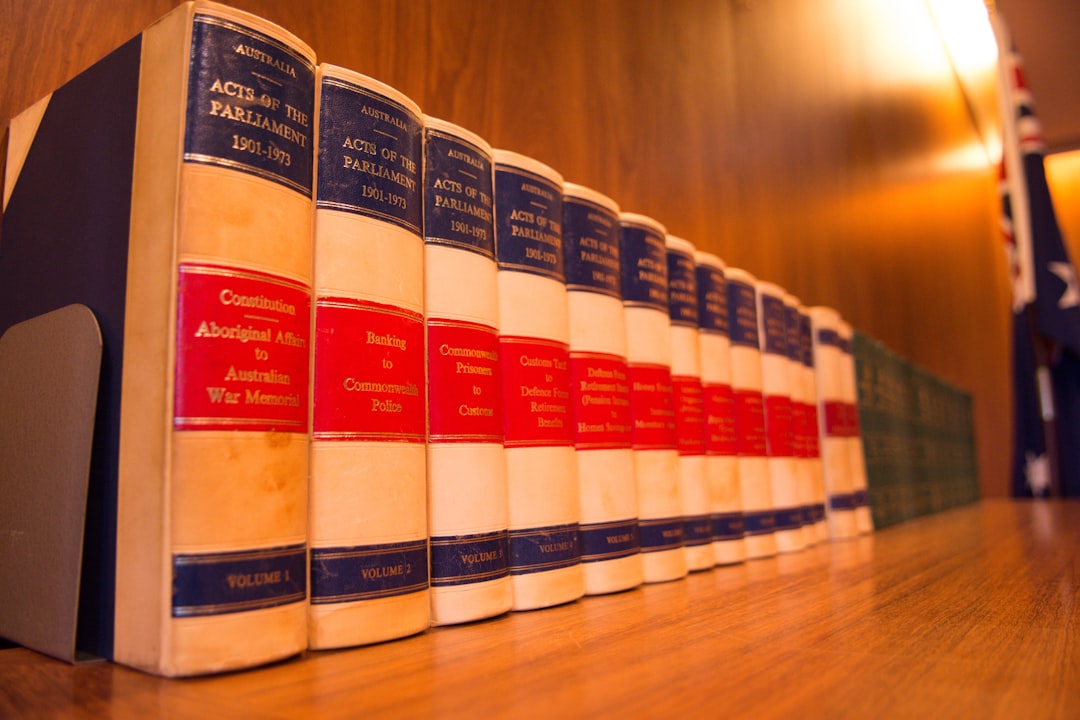
The administrative state has evolved into what scholars call a “headless fourth branch of government” — a vast bureaucratic apparatus that exercises legislative, executive, and judicial functions without constitutional authorization. These agencies write rules with the force of law, enforce those rules through their own investigations, and adjudicate violations in their own tribunals. This is not separation of powers. This is the concentration of powers in institutions the Constitution never contemplated.
The Environmental Protection Agency can rewrite energy policy through regulatory interpretation. The Federal Reserve can reshape monetary policy without congressional input. Immigration agencies can effectively rewrite immigration law through enforcement priorities. Each of these actions represents the exercise of powers the Constitution explicitly assigns to Congress, yet Congress has abdicated its responsibility in favor of bureaucratic convenience.
This transfer of authority has created a governing class that is accountable to no voter and responsive to no election. Career bureaucrats outlast presidents and congresses, building institutional power that transcends electoral cycles. They are, in effect, a permanent government that governs the temporary officials we actually elect.
Rome’s Republic Teaches America’s Future
The Roman Republic offers the cautionary tale we refuse to acknowledge. Like us, Rome began with carefully balanced institutions designed to prevent the concentration of power. Like us, Romans watched those institutions gradually surrender authority to administrative convenience and executive efficiency. The result was not dramatic collapse but slow transformation — a republic that became an empire while maintaining republican forms.
The American administrative state represents our version of the Roman imperial bureaucracy that eventually governed while emperors ruled. We maintain the forms of constitutional government while the substance migrates to unelected institutions. This is how republics die — not through revolution but through institutional surrender.
The Constitutional Convention We Need But Won’t Call
The solution requires constitutional courage we have not shown since 1787. We need a new constitutional convention that formally acknowledges the reality of modern governance while restoring democratic accountability to the administrative state. This means constitutionally defining the proper scope of administrative agencies, establishing term limits for federal judges, and creating meaningful mechanisms for legislative oversight of bureaucratic rule-making.
The alternative is accepting the constitutional monarchy we have already built. We can formalize the administrative state’s authority while subjecting it to democratic control, or we can pretend the problem will solve itself while power continues its inexorable concentration in unelected hands.
Franklin’s republic can still be kept, but only if we admit we are losing it. The founders gave us the tools to prevent tyranny. We must find the will to use them before the American Republic joins Rome in the graveyard of good intentions and institutional decay.
The choice is ours. The time is now. The republic, if we can keep it, hangs in the balance.