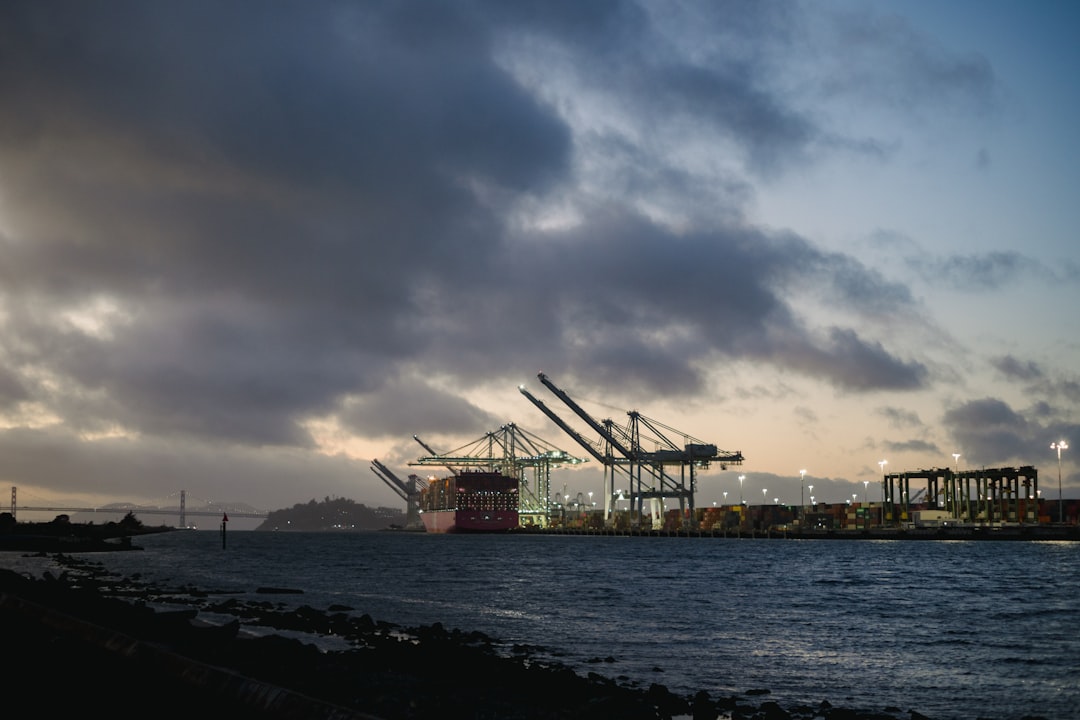
China controls 50% of global shipbuilding capacity. America registers at 0.13%. Our merchant fleet has collapsed from 2,926 large commercial vessels in 1960 to just 188 today — a 94% decline even as the global fleet more than doubled. That is not a market correction. It is an industrial surrender spanning six decades and both parties, and nobody in Washington has the policy architecture to reverse it.
The latest chapter is the most absurd. Steel tariffs — doubled to 50% this year — were supposed to strengthen American manufacturing. Instead they raised the cost of the single most important input for building ships. Steel prices jumped 20% year-over-year. Aluminum surged 40%. Every downstream industry that uses steel got hammered, shipbuilding hardest of all. We are subsidizing one input supplier at the direct expense of the strategic industry that input is supposed to serve.
Steel Tariffs Are Industrial Policy in Reverse
The math is devastating. Hull steel plates now cost $500–1,500 per ton, up dramatically from pre-tariff levels. A single commercial vessel requires thousands of tons. When our yards already compete against Chinese shipbuilders backed by state subsidies and 200x greater capacity, adding a 50% tariff premium to our core input material is not strategy. It is surrender dressed as toughness.
The Peterson Institute calculated the damage: steel tariffs cost steel-using industries $650,000 for every steel job saved, while adding only $270,000 to steel industry profits per job. We are paying nearly 2.5x more to destroy downstream manufacturing than we gain in upstream protection. That is not trade policy — that is wealth transfer from industries that build things to industries that supply things, with no coherent strategy connecting the two.
This is what happens when industrial policy is designed by lobbyists instead of strategists. Steel producers have a concentrated political interest. Shipbuilders, defense contractors, and manufacturers who consume steel are diffuse. The concentrated interest wins every time, and the strategic interest — actually building ships — loses.
The China Model: What Coherent Industrial Policy Looks Like
Beijing did not stumble into shipbuilding dominance. They engineered it. In 2000, China’s leadership designated shipbuilding as a strategic industry. By 2002, Premier Zhu Rongji declared China would become the world’s foremost shipbuilder by 2015. They hit that target early and never looked back.
China’s approach integrated every policy lever: subsidized steel for domestic shipyards, coordinated financing, protected domestic orders, and massive infrastructure investment. Their state-owned shipbuilder alone has built more tonnage since 2024 than America’s entire industry has delivered since World War II. This is not cheap labor. This is institutional commitment to an industrial objective, with every policy instrument pointed in the same direction.
We cannot even decide whether steel producers or steel consumers matter more for national security. The result: we get neither competitive steel nor competitive shipbuilding. China optimizes across the entire value chain. We optimize for whoever has the best lobbyist this quarter.
The Jones Act Trap: Protection Without Production
America’s shipbuilding crisis predates the current tariff regime by decades. The deeper rot is the Jones Act — a 1920 law requiring that all goods shipped between U.S. ports travel on American-built, American-crewed, American-flagged vessels. The theory was preserving our maritime industrial base. The reality was a captive market for uncompetitive shipyards that never had to improve.
When shipbuilding subsidies expired in 1981, foreign competition demolished our commercial yards. Between 1987 and 1992, U.S. shipbuilders delivered only eight commercial ships over 1,000 gross tons — down from 77 annually in 1975. The Jones Act kept a handful of yards alive building expensive, low-volume vessels for protected domestic routes while the rest of the world moved on.
Puerto Rico is the sharpest proof of this failure. The island — home to 3.2 million American citizens — pays roughly twice the shipping cost of the nearby Dominican Republic for a twenty-foot container from the mainland, according to a Federal Reserve Bank of New York study. Every gallon of fuel, every solar panel, every bag of concrete arrives on Jones Act–compliant vessels that cost multiples of their foreign-built equivalents. When Hurricane Maria devastated the island in 2017, the Jones Act waiver debate consumed days of political bandwidth while Puerto Ricans waited for relief. The law designed to protect American maritime capacity had produced so little of it that we could not even supply our own territory in a crisis.
Layering steel tariffs on top of this dysfunction compounds the damage. The Jones Act already makes American ships artificially expensive to operate. Now we have made them artificially expensive to build. It is protectionism squared — shielding steel producers from foreign competition while shielding shipbuilders from domestic competition — and the predictable result is an industry that cannot compete with anyone, anywhere, on anything.
The Defense Industrial Base Contradiction
The national security argument for steel tariffs collapses under its own logic. Yes, domestic steel capacity matters for defense production. But domestic shipbuilding, aircraft manufacturing, and defense contractors all use steel as an input. Making steel more expensive weakens the entire defense industrial base to benefit one segment of it.
The AUKUS submarine partnership faces cost escalation from steel tariffs that could delay deliveries to Australia. Air Force transport commanders depend on commercial maritime capacity that we are systematically destroying through contradictory policies. We are strengthening steel mills while weakening the military capabilities that steel is supposed to serve. That is not national security strategy. It is one lobby’s priority masquerading as the national interest.
China understands the integration we refuse to build. Their shipbuilding surge serves both commercial and military objectives, creating dual-use capacity that supports naval expansion and economic projection simultaneously. We are building expensive steel for increasingly expensive ships we cannot afford to build at competitive volumes.
The Path Forward: Build the Industrial Policy or Admit We Won’t
Bipartisan frustration is real. Representative Joe Courtney — a Democrat — has warned that tariff increases are undermining the shared goal of building ships faster and bigger. The complaints span party lines because the economics transcend politics. Every shipyard in America faces the same impossible math: absorb massive cost increases, pass them to buyers, delay projects, or cut workers. None of those options rebuild American shipbuilding.
America needs industrial policy that optimizes for strategic outcomes, not sectoral lobbying. If shipbuilding matters for national security — and it does — then every policy lever should point toward shipbuilding competitiveness. That means tariff exemptions for qualified shipbuilders so they can access steel at global prices. It means replacing the Jones Act’s market protection with production incentives — instead of guaranteeing captive customers for uncompetitive yards, guarantee competitive cost structures through strategic subsidies tied to productivity improvements and export performance.
China’s shipbuilding dominance stems from treating the industry as a strategic asset, not a jobs program. Their yards compete globally while ours compete for protection. We will not rebuild American maritime power by making it more expensive to build American ships. We will rebuild it by choosing coherence over contradiction — by deciding that the shipbuilding industry matters enough to align every policy instrument behind it, the way Beijing did twenty-five years ago.
The clock is running. Every year we spend protecting steel profits at the expense of shipbuilding competitiveness is another year China builds the fleet that controls global commerce. We have the engineering talent, the naval heritage, and the strategic need. What we lack is the policy architecture to connect them. Build it or stop pretending we have an industrial strategy.