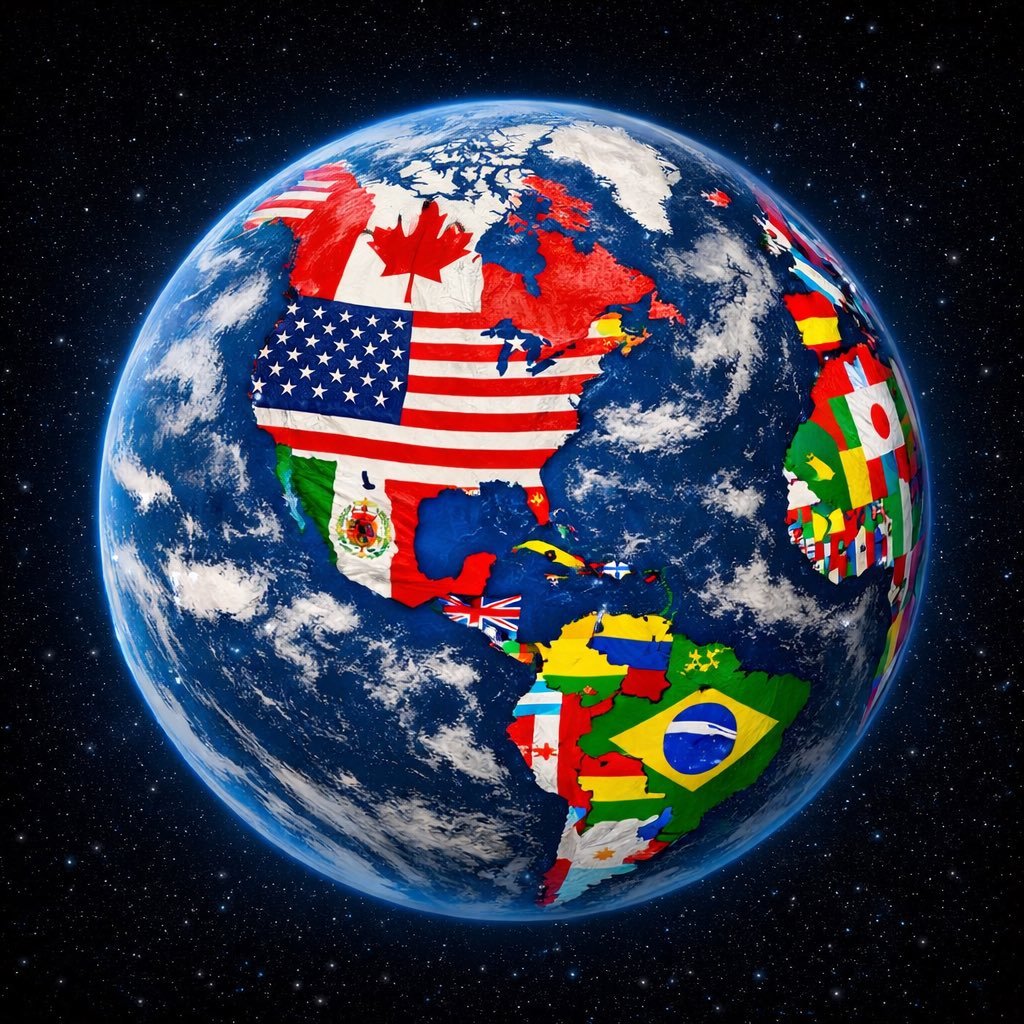
You don’t think about foreign policy when you fill your gas tank. You don’t think about it when you buy groceries, check your 401(k), or book a flight. You should. Because every one of those transactions is shaped by decisions made in Washington, Beijing, Brussels, and Riyadh by people you’ve never met about places you’ve never been. Foreign policy isn’t something that happens “over there.” It’s the invisible operating system running underneath your daily life. You just never read the terms of service.
Most Americans treat foreign policy as a spectator sport — something that matters to diplomats, generals, and cable news pundits but has nothing to do with their commute or their mortgage rate. This is spectacularly wrong. The price of your gasoline, the interest rate on your savings account, the availability of the medication in your medicine cabinet, and the security of the device in your pocket are all downstream of foreign policy decisions. The sooner we stop treating geopolitics as someone else’s problem, the sooner we can start making better decisions about our own lives.
Your Gas Tank Is a Foreign Policy Briefing
Every time you fill up, you’re participating in a global energy market shaped entirely by geopolitical decisions. The price at the pump isn’t determined by your local gas station or even by the oil companies. It’s determined by OPEC production quotas negotiated in Vienna, sanctions regimes imposed on Iran and Venezuela, pipeline politics between Russia and Europe, and the US Navy’s willingness to keep the Strait of Hormuz open.
When Russia invaded Ukraine in 2022, gas prices spiked not because American oil supply changed but because global markets priced in the risk that Russian energy — which supplied 40% of Europe’s natural gas — might be weaponized. It was. European nations scrambled for alternatives, bidding up prices worldwide. An American in Ohio paying $5 a gallon was paying the price of a geopolitical decision made in Moscow.
This isn’t an exception. It’s the norm. The shale revolution that brought gas prices down in the 2010s? That was enabled by US energy policy and technological innovation — but it also reshuffled global power dynamics, weakening petrostates like Russia and Venezuela while strengthening American strategic leverage. Your cheap gas wasn’t just an economic phenomenon. It was a geopolitical weapon.
Your Grocery Bill Is a Trade Policy Report Card
Walk through a grocery store and you’re walking through a map of global trade agreements. Chilean wine. Mexican avocados. Norwegian salmon. Colombian coffee. Every item on the shelf arrived there because of trade policies, tariffs, shipping routes, and diplomatic relationships that most consumers never consider.
When the Trump administration imposed tariffs on Chinese goods, the retaliatory tariffs hit American agriculture hard. Soybean farmers lost their largest export market overnight. Pork producers watched Chinese demand evaporate. Those costs didn’t stay on the farm — they rippled through supply chains, affecting prices, availability, and the viability of rural communities that depend on agricultural exports.
COVID made the connection impossible to ignore. When shipping containers stacked up in Chinese ports, American shelves went bare. When fertilizer exports from Russia and Belarus were sanctioned, global food prices spiked. When Ukraine — one of the world’s largest grain exporters — became a war zone, bread prices in Egypt triggered fears of political instability. Your grocery bill and a farmer in Odessa are connected by a supply chain that foreign policy either protects or disrupts.
Your 401(k) Has a Foreign Policy
If you have a retirement account, you have foreign policy exposure whether you know it or not. The S&P 500 derives roughly 40% of its revenue from international markets. When China’s economy slows, American corporate earnings decline. When the European Central Bank changes monetary policy, capital flows shift. When sanctions hit Russia, companies with Russian exposure write down billions.
Interest rates — the single most important variable for mortgages, car loans, and credit cards — are set by the Federal Reserve, but the Fed doesn’t operate in a vacuum. The dollar’s status as the world’s reserve currency gives the Fed enormous power, but that status depends on foreign governments continuing to hold dollar-denominated assets. China and Japan alone hold over $2 trillion in US Treasury securities. If either decided to dump those holdings — as a geopolitical weapon or a response to sanctions — interest rates would spike and every American with a variable-rate mortgage would feel it immediately.
The connection between your retirement savings and foreign policy isn’t abstract. It’s arithmetic. Every geopolitical crisis, every sanctions regime, every trade war shows up in your portfolio within hours. The market doesn’t distinguish between domestic and foreign — it prices in everything, everywhere, all at once.
Your Phone Is a Geopolitical Battleground
The device in your pocket exists because of a global semiconductor supply chain that runs through Taiwan, South Korea, the Netherlands, and Japan — four countries whose security is guaranteed, directly or indirectly, by American military commitments. If China invades Taiwan, your next iPhone doesn’t get made. That’s not hyperbole. TSMC fabricates over 90% of the world’s most advanced chips. There is no backup.
The 5G network your phone connects to? That’s a foreign policy decision. The US government banned Huawei equipment from American networks — and pressured allies to do the same — because Chinese telecommunications infrastructure represents a potential intelligence collection platform. Whether you agree with that decision or not, it directly affects the speed, cost, and security of the network you use every day.
Your data is a geopolitical asset. Where it’s stored, who can access it, and what laws govern its protection are all questions of foreign policy. The EU’s GDPR, China’s data localization requirements, and American debates over TikTok are all expressions of the same underlying reality: in a connected world, information policy is foreign policy, and your phone is on the front line.
Your Medicine Cabinet Has Supply Chain Risk
Roughly 80% of active pharmaceutical ingredients used in American medications are manufactured overseas, with significant concentration in China and India. This isn’t a market outcome — it’s a policy failure that foreign policy now has to manage.
When India restricted the export of certain antibiotics during COVID, American hospitals felt the squeeze within weeks. The fragility of pharmaceutical supply chains isn’t theoretical — it’s been tested, and it failed. The same country that can put a carrier strike group anywhere on Earth in 48 hours can’t guarantee a stable supply of basic antibiotics because we offshored production to save pennies per pill.
This is what happens when economic policy ignores geopolitical risk. Cheap drugs from countries that may become adversaries or face their own crises isn’t efficiency — it’s vulnerability dressed up as savings. The reshoring debate in pharmaceuticals isn’t protectionism. It’s national security.
What Should Happen
Stop treating foreign policy as a specialty subject. It’s not international relations theory — it’s the price of gas, the stability of your job, and the security of your retirement. Every American is a stakeholder in foreign policy whether they vote on it or not. The citizens who understand these connections will make better decisions — at the ballot box, in their investment portfolios, and in how they think about the world beyond their zip code.
Demand that politicians explain the domestic consequences of foreign policy positions. “Bring the troops home” sounds great until you understand that the troops are protecting the shipping lanes that deliver your consumer goods. “Get tough on China” sounds great until you understand that the toughness might triple the cost of your electronics. There are no free moves in geopolitics. Every decision has a price, and voters deserve to know what it is before they cheer for it.
Pay attention. Not to the cable news shouting matches — to the actual policy. Read about OPEC production decisions when gas prices move. Understand why semiconductor policy matters when you hear about Taiwan. Notice the trade agreements that determine what’s on your grocery shelf and what it costs. Foreign policy isn’t abstract. It’s the most concrete thing in your life that you’ve been trained to ignore.
The wall between “domestic” and “foreign” was always an illusion. In a globalized economy, there is no domestic. There’s only the part of the world you can see and the much larger part that’s shaping your life without your permission. Start paying attention before the next crisis makes the connection for you.
Further Reading
- The End of the World Is Just the Beginning by Peter Zeihan — how deglobalization will reshape the supply chains behind your daily life
- Chip War by Chris Miller — the geopolitics inside your phone
- Prisoners of Geography by Tim Marshall — the maps that explain why your gas prices move