The Iran war is effectively over. Three weeks of sustained air operations dismantled Iran’s air defenses, neutralized its nuclear program, and shattered its ability to project power through proxies. By any conventional military measure, this was a decisive American victory. So why is the Pentagon requesting $200 billion?
The answer has almost nothing to do with Iran.
The Military Campaign Worked
Give credit where it’s due. The strikes were precise, the objectives were clear, and the execution was fast. Iran’s integrated air defense network, built over decades with Russian and Chinese components, was systematically destroyed in the opening days. Its nuclear enrichment facilities at Natanz and Fordow are rubble. The IRGC’s command infrastructure took hits that will take a generation to rebuild.
This is not Afghanistan, where the mission was nation-building in a country that resisted the concept. This is not Iraq, where regime change led to a decade of occupation and sectarian war. Iran is too large, too mountainous, and too nationally cohesive to occupy. Anyone suggesting the United States could install institutions or govern 88 million Iranians across a territory three times the size of Iraq is not serious. The Pentagon knows this.
The campaign was designed to destroy military capability, not to rebuild a country. And it succeeded.
So What Is $200 Billion For?
If the war is won and occupation is off the table, the funding request needs a different explanation. Look at Kharg Island.
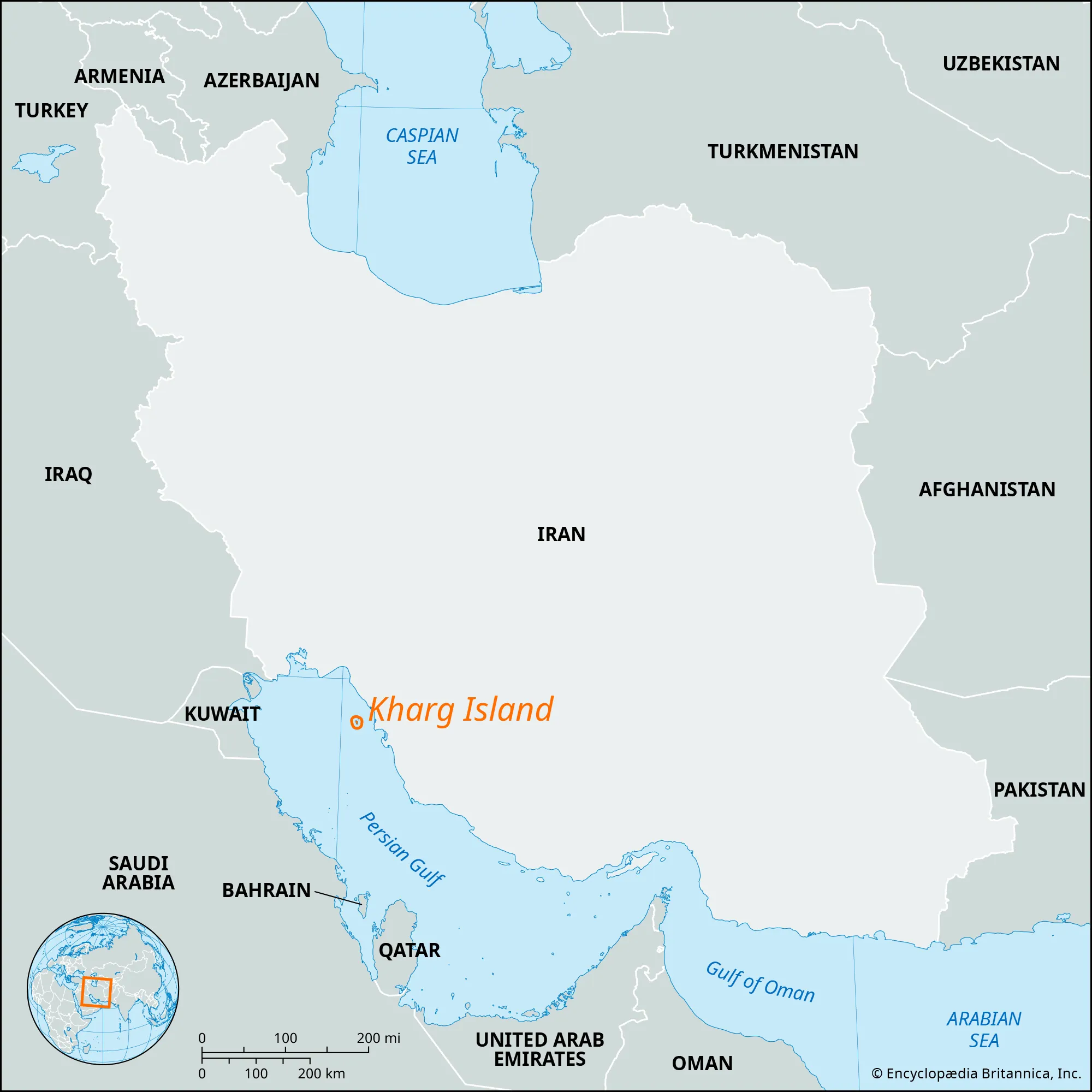
Kharg Island handles roughly 90% of Iran’s oil exports. It sits in the northern Persian Gulf, relatively isolated, and is far easier to hold than the Iranian mainland. Seizing and maintaining control of Kharg Island would give the United States direct control over Iran’s oil outflows without requiring a single boot on Iranian soil beyond the island itself.
This is not speculation dressed up as analysis. The $200 billion request includes language about “expanded operations” and “maintaining strong military presence.” That is basing infrastructure money. That is logistics and sustainment money. That is the kind of funding you request when you intend to hold strategic terrain for an extended period.
The question is why. And the answer is not Iran.
Follow the Oil to Beijing
Venezuela came first. The naval blockade and oil embargo cut off one of China’s most reliable crude suppliers in the Western Hemisphere. Venezuelan heavy crude was difficult to replace, and China’s refineries that were configured for it could not simply switch sources overnight.
Now Iran. Between sanctions enforcement, naval interdiction, and the likely seizure of export infrastructure, the United States is positioned to remove Iranian crude from global markets entirely. Or more precisely, to decide who gets it and who does not.
Together, Venezuela and Iran represent somewhere between 20 and 40 percent of China’s oil imports. The United States has effectively restricted both within a single year. That is not coincidence. That is a coordinated strategy to control the energy inputs that power China’s economy and military.
The Coherent Strategy Nobody Wants to Discuss
American foreign policy commentary tends to evaluate each conflict in isolation. Iran is about nuclear weapons. Venezuela is about democracy. Each gets its own news cycle, its own congressional debate, its own round of think-tank analysis.
But viewed together, the pattern is unmistakable. The United States is systematically targeting the oil supplies that China depends on but cannot protect. China’s navy can operate in the South China Sea, but it cannot secure tanker routes from the Persian Gulf or the Caribbean against American interdiction. Every barrel of oil that flows to China through waters the U.S. Navy controls is a barrel that flows at American discretion.
This is the same strategic logic that shaped the Pacific campaign in World War II. Control the resources your adversary needs, and you control the tempo of competition without firing a shot at the adversary directly. The Iran war and the Venezuela operation are not separate conflicts. They are two fronts in an energy containment strategy aimed squarely at Beijing.
What the $200 Billion Actually Buys
The funding is not for rebuilding Iran. It is not for installing democratic institutions or training a new Iranian security force. It is for maintaining the naval and air presence required to control Persian Gulf oil flows indefinitely. It is for basing infrastructure on or near Kharg Island. It is for the logistics chain that keeps American forces supplied in a region where they intend to stay.
Congressional critics like Chip Roy and Thomas Massie are right to ask hard questions about the price tag. $200 billion is serious money. But the framing matters. This is not a forever war supplemental. This is an investment in strategic energy leverage against the United States’ primary competitor.
Whether that investment is worth it depends on whether you believe the competition with China is the defining challenge of the next several decades. If it is, then controlling 20 to 40 percent of your adversary’s energy supply through relatively low-cost military presence is one of the most efficient strategic moves available.
The Real Debate We Should Be Having
The conversation should not be about whether the Iran war was justified or whether $200 billion is too much for “another forever war.” The war is over. The question is whether sustained American control of global oil chokepoints is the right strategy for managing great power competition with China.
That is a serious question that deserves serious discussion. It involves tradeoffs around military spending, alliance management in the Gulf, energy market disruption, and the risk of escalation with a nuclear-armed rival. Those are hard questions.
But they are the right questions. The wrong question is whether this is Iraq 2.0. It is not. The geography is different, the objectives are different, and the strategy is different. The sooner the debate catches up to the actual strategy, the better the decisions will be.
Further Reading
- The End of the World Is Just the Beginning by Peter Zeihan — why energy geography determines the winners and losers of the next era
- The Accidental Superpower by Peter Zeihan — how American geography enables global energy control
- Prisoners of Geography by Tim Marshall — the physical constraints that shape military strategy
- The Grand Chessboard by Zbigniew Brzezinski — the blueprint for managing great power competition through resource control