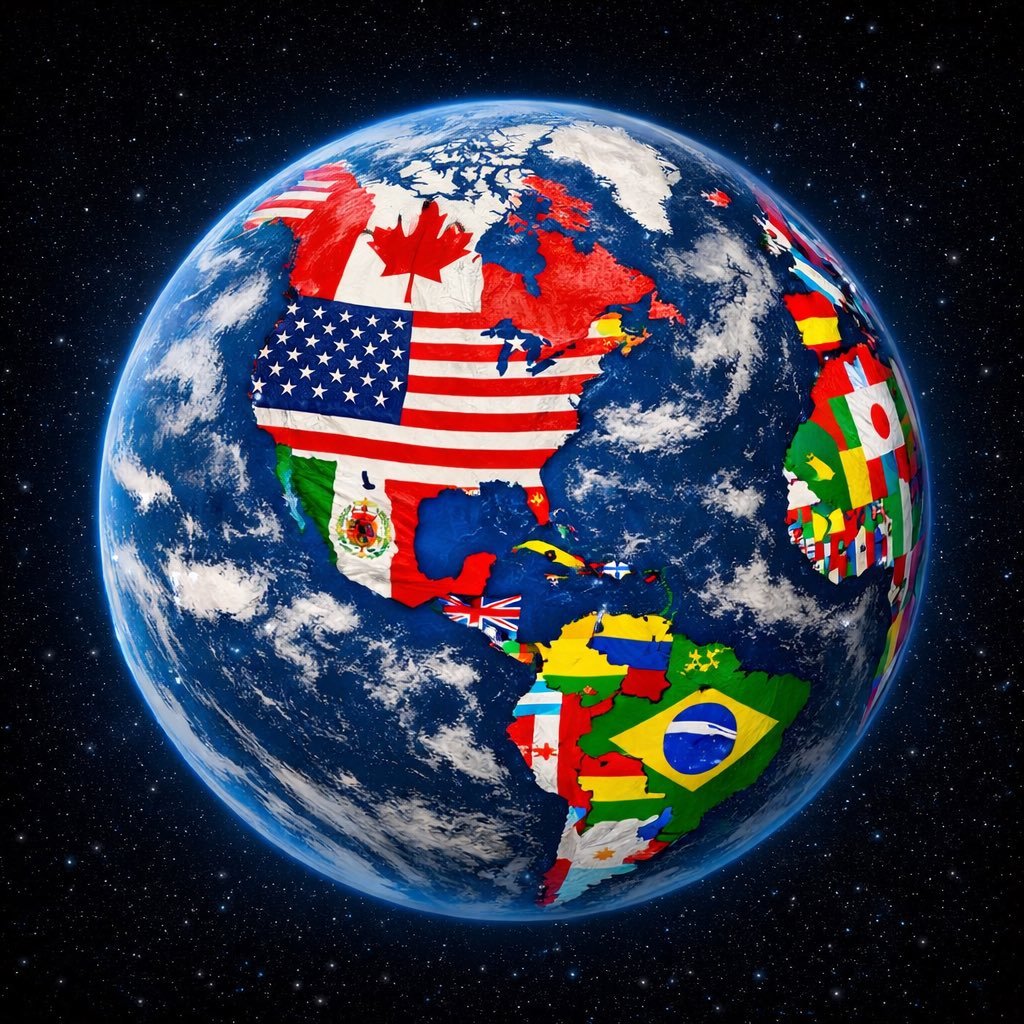
The nation-state was a revolutionary idea. It was also a recent one — barely two centuries old in a species that’s been organizing itself for millennia. The American and French revolutions didn’t just overthrow kings. They invented a new unit of political identity: the nation, defined by shared citizenship rather than shared blood or faith. That idea conquered the world. Now it’s losing ground.
The conventional wisdom says the nation-state is the natural and permanent organizing unit of global politics. The conventional wisdom is lazy. What we’re witnessing — from Beijing to Brussels to Riyadh — is the re-emergence of something older and arguably more durable: the civilization state.
The Nation-State Was Always the Exception
For most of human history, political organization followed civilizational lines. The Roman Empire didn’t govern a nation — it governed a civilization. The Ottoman Empire spanned dozens of ethnic groups unified by Islamic law, trade networks, and administrative tradition. China’s imperial system persisted for two thousand years not because of ethnic homogeneity but because of civilizational coherence: shared philosophy, shared writing system, shared sense of what it meant to be Chinese regardless of which dynasty held the Mandate of Heaven.
The nation-state was Europe’s invention, born from the wreckage of the Thirty Years’ War and codified at Westphalia in 1648. It worked spectacularly well — for Europe. Exported to the rest of the world via colonialism, it worked considerably less well. The borders drawn across Africa, the Middle East, and South Asia sliced through civilizational realities that predated them by centuries. We’re still paying for that arrogance.
The question isn’t why civilization states are emerging now. The question is why we ever expected the nation-state model to be permanent.
China Never Stopped Being a Civilization State
Xi Jinping doesn’t govern a nation-state that happens to have an old culture. He governs a civilization that happens to have a modern state apparatus. This distinction matters enormously and Western analysts consistently miss it.
China’s political legitimacy doesn’t rest on democratic consent or constitutional order. It rests on civilizational continuity — the claim that the Communist Party is the latest custodian of a five-thousand-year tradition. When Beijing talks about “socialism with Chinese characteristics,” the operative words aren’t socialism. They’re Chinese characteristics. The ideology is negotiable. The civilizational identity is not.
This is why Western predictions of Chinese political liberalization were always fantasy. The assumption that economic development leads to democracy is a nation-state assumption — it presumes that citizens will demand individual rights as they grow wealthier. But in a civilization state, legitimacy comes from collective continuity, not individual consent. China’s middle class doesn’t want to vote. It wants to be governed competently by an institution that honors the civilizational mission. That’s a fundamentally different social contract, and we ignore it at our peril.
Trade Blocs Are Civilizational Scaffolding
Here’s what people get wrong about trade blocs: they think they’re about trade. They’re not. Trade is the mechanism. Identity is the product.
The European Union started as a coal and steel agreement. Today it has a shared currency, a parliament, a court system, a foreign policy apparatus, and a supranational bureaucracy that regulates everything from agricultural subsidies to data privacy. The EU isn’t becoming a nation — it’s becoming a civilization state, slowly reassembling the cultural and economic unity that existed before nationalism carved Europe into competing fragments.
ASEAN is doing something similar in Southeast Asia. The Gulf Cooperation Council is doing it in the Arabian Peninsula. The African Union aspires to it across an entire continent. RCEP — the Regional Comprehensive Economic Partnership — covers nearly half the world’s population and a third of global GDP, quietly building the infrastructure of an East Asian economic civilization.
The pattern is consistent: countries that share civilizational roots form trade blocs. Trade blocs develop shared institutions. Shared institutions create shared identity. Shared identity produces political alignment that transcends national borders. The nation-state doesn’t disappear — it gets absorbed into something larger.
Why This Matters for America
The United States is the world’s most successful nation-state. It’s also, paradoxically, something more. American identity isn’t ethnic — it’s ideological. The proposition that all men are created equal, that government derives its legitimacy from the governed, that individual rights are inalienable — these aren’t national characteristics. They’re civilizational claims.
This gives America a unique advantage in a world of civilization states: our civilization is defined by ideas, not geography or ethnicity. Anyone can become American in a way that no one can become Chinese or become part of the Islamic ummah without conversion. That’s a superpower that most Americans don’t appreciate because they’ve never known anything else.
But it’s also a vulnerability. If Americans stop believing in the ideological foundation — if citizenship becomes tribal rather than propositional — then the United States loses its civilizational coherence. We become just another nation-state competing with civilization states that have millennia of cultural gravity on their side. That’s a fight we lose.
What Should Happen
First, stop pretending the nation-state model is universal and eternal. It was a useful innovation for a specific historical moment. That moment is passing. Policy built on the assumption that every country operates like a European nation-state will continue to fail spectacularly — as it has in Iraq, Afghanistan, Libya, and everywhere else we’ve tried to nation-build without understanding the civilizational substrate.
Second, take civilizational identity seriously as a strategic variable. China isn’t a peer competitor in the way the Soviet Union was — it’s a civilizational rival offering an alternative model of modernity. Russia under Putin is explicitly framing itself as a civilization state distinct from the West. India under Modi is doing the same. These aren’t ideological projects. They’re identity projects, and they draw on reservoirs of meaning far deeper than any political party can generate.
Third, strengthen our own civilizational proposition. The American idea — pluralistic, constitutional, rights-based — is still the most compelling political project on Earth. But it requires maintenance. It requires that we actually teach it, believe in it, and extend it credibly. A civilization state that stops believing in its own civilization is just a territory with a flag.
The age of the pure nation-state is ending. What replaces it will determine the shape of the 21st century. We should make sure the American civilizational model is still in the conversation when the dust settles.
Further Reading
- The Clash of Civilizations by Samuel P. Huntington — the original thesis that post-Cold War conflict follows civilizational fault lines
- Dominion by Tom Holland — how Christianity shaped the Western civilizational identity we take for granted
- The Lessons of History by Will & Ariel Durant — civilizational patterns distilled from eleven volumes of world history